
Cybersecurity researcher Jeremiah Fowler has uncovered a massive data exposure involving 184 million login credentials stored in an unprotected database totaling 47.42 GB of raw credential data.
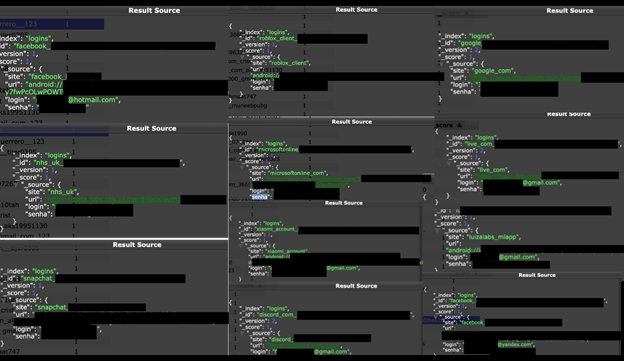
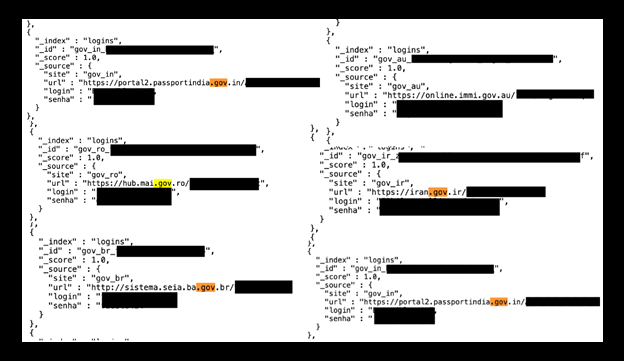
The exposed information includes passwords for major platforms like Facebook, Instagram, Microsoft, banking services, and government portals from multiple countries, with evidence suggesting the data was harvested through infostealer malware campaigns.
The publicly accessible database contained 184,162,718 unique login and password combinations across a vast array of services and applications.
Fowler’s investigation revealed credentials for email providers, social media platforms including Facebook, Instagram, Snapchat, and Roblox, as well as sensitive accounts from banking institutions, healthcare platforms, and government portals worldwide.
The database was neither password-protected nor encrypted, making it freely accessible to anyone who discovered its location.
The IP address connected to two domain names, with one parked and unavailable while the other appeared unregistered and available for purchase.
The private Whois registration made identifying the actual database owner impossible, prompting Fowler to immediately contact the hosting provider through responsible disclosure protocols.
Following Fowler’s report, the hosting provider restricted public access to the database, though they declined to reveal customer information.
The timeline of the exposure remains unknown, as does whether other malicious actors accessed the data before its discovery.
Infostealer Malware Origins
The exposed records exhibited clear indicators of data harvesting through infostealer malware, specialized malicious software designed to extract sensitive information from infected systems.
This type of malware typically targets credentials stored in web browsers, email clients, and messaging applications, often expanding to capture autofill data, cookies, cryptocurrency wallet information, screenshots, and keystroke logs.
Cybercriminals deploy infostealers through various attack vectors, including phishing emails, malicious websites, and compromised software downloads.
Once active, the stolen data circulates on dark web marketplaces and Telegram channels or enables direct fraudulent activities, identity theft, and subsequent cyber attacks.
Interestingly, the database files were labeled “senha” (Portuguese for password) while maintaining English text throughout, suggesting possible Brazilian criminal involvement.
Fowler validated the data’s authenticity by contacting multiple email addresses from the database, with several individuals confirming their passwords were accurate.
Security Implications and Protection Measures
The breach presents severe risks across multiple attack vectors. Credential stuffing attacks become highly viable when users recycle passwords across multiple services, allowing automated scripts to test combinations across hundreds of platforms.
Account takeovers become trivial for services lacking two-factor authentication, potentially leading to identity theft and financial fraud.
Corporate and government implications are particularly concerning, as the database contained numerous business credentials and government accounts from various countries.
These could facilitate corporate espionage, ransomware deployment, or unauthorized access to sensitive state networks.
Security experts recommend immediate protective measures including annual password changes, unique passwords for every account, mandatory two-factor authentication activation, and regular credential monitoring through services like haveibeenpwned.
Additionally, users should deploy reputable antivirus software with both signature-based and behavior-based detection capabilities to identify infostealer malware.
The incident underscores critical cybersecurity vulnerabilities in our interconnected digital landscape, demonstrating how individual security practices directly impact global data protection efforts.
Find this Story Interesting! Follow us on LinkedIn and X to Get More Instant Updates.

.webp?fit=1068,580&ssl=1&description=Cybersecurity researcher Jeremiah Fowler has uncovered a massive data exposure involving 184 million login credentials stored.)