
Cybersecurity researchers have uncovered a sophisticated attack technique that allows malicious actors to establish persistent backdoors in corporate Active Directory environments by exploiting custom Client-Side Extensions (CSEs).
This method leverages trusted Windows infrastructure components to execute malicious code with SYSTEM privileges while evading traditional security monitoring, presenting a significant threat to enterprise networks worldwide.
Security experts have identified a novel persistence mechanism that abuses Active Directory Group Policy Objects (GPOs) through custom malicious Client-Side Extensions, moving beyond the well-documented abuse of built-in CSEs.
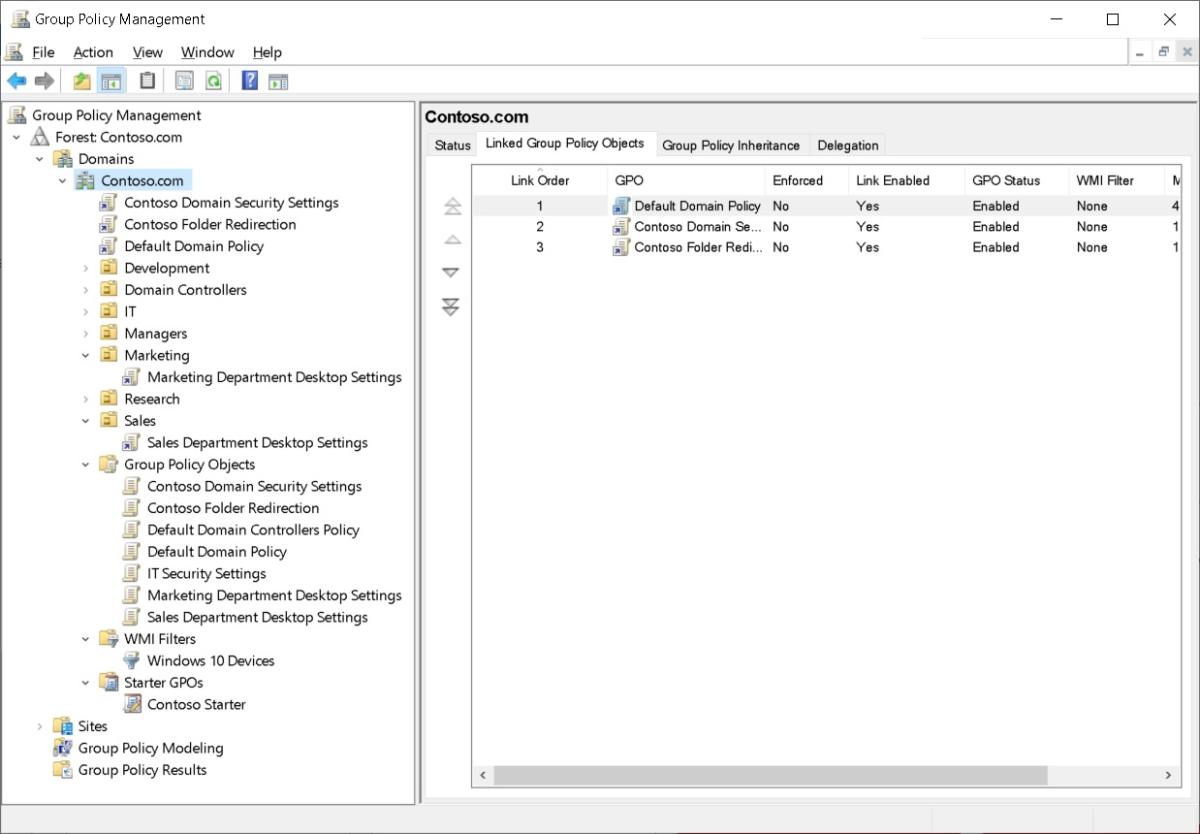
Unlike traditional attacks that exploit known CSEs such as Scheduled Tasks or Startup Scripts, this technique involves creating entirely custom CSEs that are significantly harder for security teams to identify and mitigate.
Client-Side Extensions are critical components that enable GPOs to apply specific settings like software installation, registry modifications, and system configurations to client machines across a domain.
Each CSE is essentially a dynamic link library (DLL) file responsible for processing particular types of Group Policy settings, and they execute with highly privileged SYSTEM permissions during each Group Policy refresh cycle.
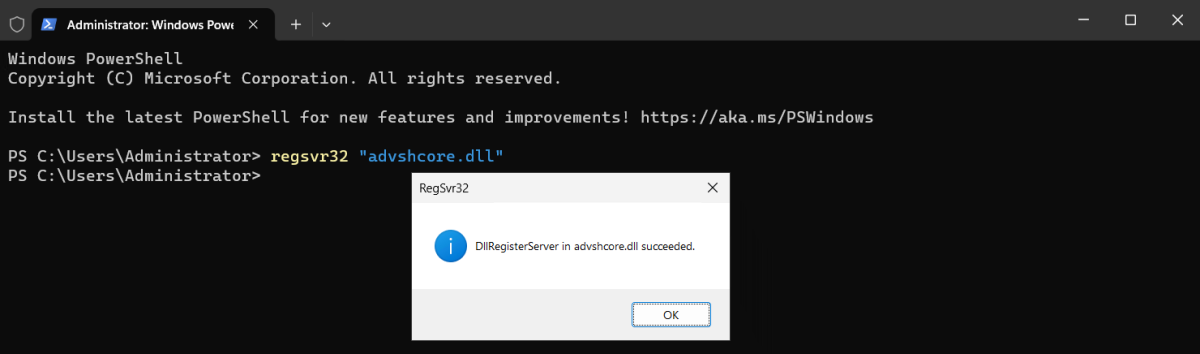
The attack method involves creating a custom malicious DLL, such as one disguised as “Group Policy Shell Configuration” with the filename “advshcore.dll,” designed to appear inconspicuous within the Windows System32 folder.
Attackers with sufficient Active Directory privileges can register this custom CSE and manipulate GPO attributes to ensure the malicious extension loads during routine policy processing.
Client-Side Extensions
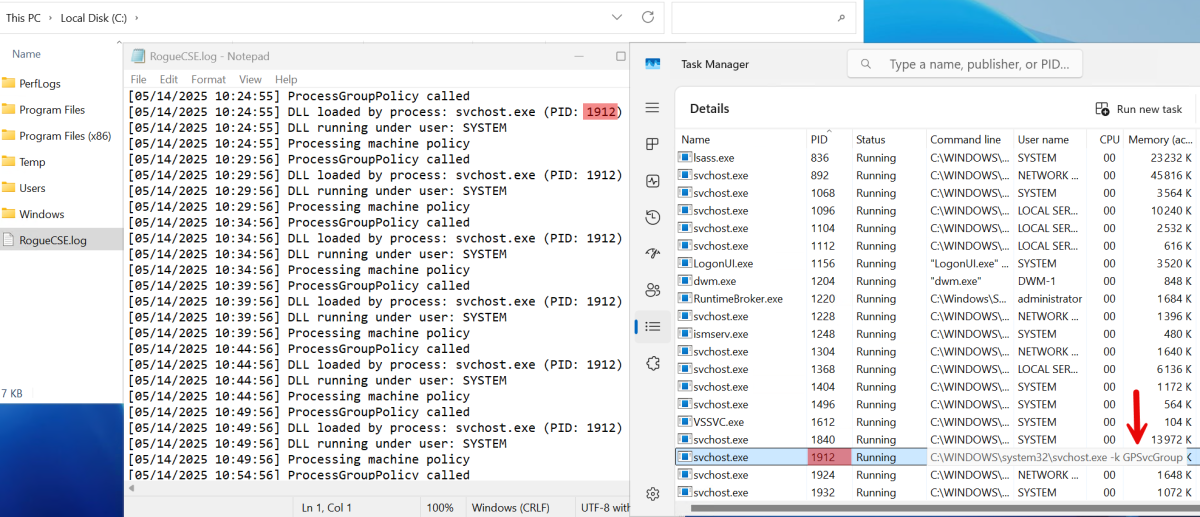
Researchers demonstrated the attack by developing a proof-of-concept CSE that logs execution details to verify SYSTEM-level code execution, though real-world implementations could deploy reverse shells, command-and-control agents, or exfiltrate sensitive data like NTDS.dit files.
The deployment process involves copying the malicious DLL to the Windows System 32 directory, registering it using tools like regsvr32, and updating the target GPO’s gPCMachineExtensionNames attribute to include the custom CSE’s globally unique identifier.
Attackers can employ various distribution strategies depending on their operational priorities.
For maximum reliability, especially targeting intermittently connected endpoints, they might use Group Policy Preferences to copy the malicious DLL locally and employ startup scripts for registration.
However, this approach increases detectability due to significant GPO modifications and reliance on commonly monitored Group Policy features.
Alternatively, for enhanced stealth, attackers can host the custom CSE DLL on network shares like SYSVOL and register remote paths, avoiding local file placement.
Even more sophisticated techniques include GUID hijacking, where attackers redirect unused legitimate CSE paths to malicious DLLs, potentially bypassing security tools that only verify GUIDs without examining actual DLL paths.
Monitoring Strategies
The stealthy nature of custom CSE abuse presents significant detection challenges for security teams.
Traditional monitoring focuses on well-known, frequently abused CSEs, but custom extensions with unknown GUIDs can operate undetected for extended periods.
Once configured within a GPO, identifying malicious CSEs becomes particularly challenging since they leverage legitimate Windows infrastructure components.
Security professionals recommend implementing comprehensive monitoring strategies including analysis of Security Event ID 5145 to detect SYSVOL write access, Event ID 4688 for suspicious process execution, and Event ID 5136 for unauthorized directory object modifications.
Organizations should also regularly audit gPCMachineExtensionNames attributes and maintain inventories of registered CSEs to identify unauthorized additions.
Advanced security solutions like Tenable Identity Exposure now include specific indicators to detect custom CSE abuse, representing a crucial evolution in Active Directory security monitoring.
Find this Story Interesting! Follow us on LinkedIn and X to Get More Instant Update

