
Yubico has released the YubiKey 5.8, a firmware update that extends the hardware security key beyond login authentication to verify and authorize digital actions, including approvals initiated by autonomous AI agents.
Announced July 21, 2026, the update responds directly to the rise of agentic AI systems capable of executing complex business workflows with minimal human oversight. Traditional multi-factor authentication answers one question: who is logging in.
As AI systems increasingly initiate transactions, approve documents, and trigger automated processes, security teams face a harder problem: confirming that a specific action was genuinely sanctioned by a human rather than spoofed mid-workflow.
Yubico Introduces YubiKey 5.8
YubiKey 5.8 tackles this by extending phishing-resistant, hardware-backed cryptography into signature and authorization use cases rather than just session logins.
“YubiKey 5.8 represents one of the most significant architectural updates to the modern authentication ecosystem by expanding phishing resistance into the workflows themselves,” said Albert Biketi, Yubico’s chief product and technology officer.
He added that organizations must now enable dynamic verification of human intent as AI agents take on high-consequence business tasks.
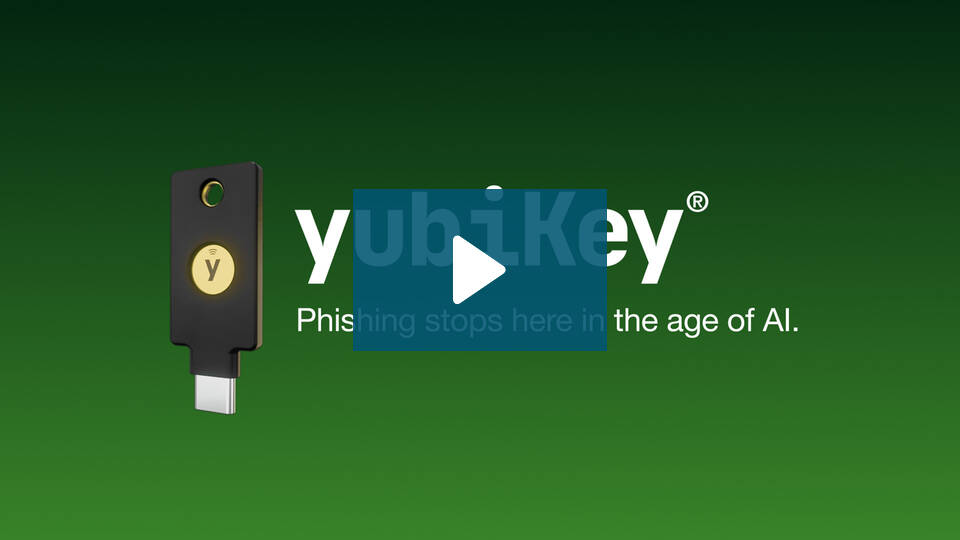
Yubico introduces CTAP 2.3 support along with preview access to the emerging WebAuthn signing extension, enabling hardware-backed digital signatures through standard APIs without requiring custom cryptographic infrastructure.
It also expands Enterprise Attestation to cover 16 Relying Party IDs per key, letting a single YubiKey operate across development, staging, and production environments spanning multiple identity providers while preserving user privacy.
The update further adds support for digital identity wallets, privacy-preserving verifiable credentials, and Secure Payment Confirmation for hardware-backed web payments.
Persistent PIN and user verification auth tokens cut down on repeated PIN prompts and enable smoother credential autofill, while a new autofill-style credential discovery mechanism works alongside software passkeys to reduce IT helpdesk enrollment overhead.
Together, these changes let developers integrate high-assurance signing into document workflows, digital wallets, and AI approval gates using familiar WebAuthn and FIDO2-adjacent standards instead of building bespoke key management backends.
Leif Johansson, executive director at the SIROS Foundation, called the signing capabilities “a game changer for digital identity and credentials,” noting that FIDO authentication became the industry standard for phishing resistance over the past decade, and that adding signature support opens new applications without introducing platform lock-in.
YubiKey 5.8 ships across all major YubiKey product lines starting immediately and remains fully backward-compatible with YubiKey 5.7.4.
Two exceptions apply for regulated environments: the YubiKey FIPS Series stays on FIPS 140-3 validated firmware 5.7.4 to preserve compliance, and the YubiKey CCN Series also remains on 5.7.4 pending final re-certification.
Organizations in FIPS or Common Criteria-regulated sectors should not expect 5.8 features until those certifications complete.
The launch signals a broader industry shift, with authentication vendors treating AI agents as first-class actors in enterprise workflows that require cryptographic accountability.
Enterprises building AI-driven approval chains or document-signing pipelines should evaluate whether hardware-backed signature verification closes gaps that session-based MFA leaves open, particularly around non-repudiation and human-in-the-loop validation.
Cut SOC investigation blind spots and contain threats earlier to reduce response costs and business disruption with ANY.RUN.

